How it works
How It Works
PAP therapy designed for people who breathe.
KPAP isn’t a modification of what already exists. It’s PAP therapy designed around how you naturally breathe, not how much discomfort you can tolerate to receive treatment.
The Kairos
The right pressure at the right time.
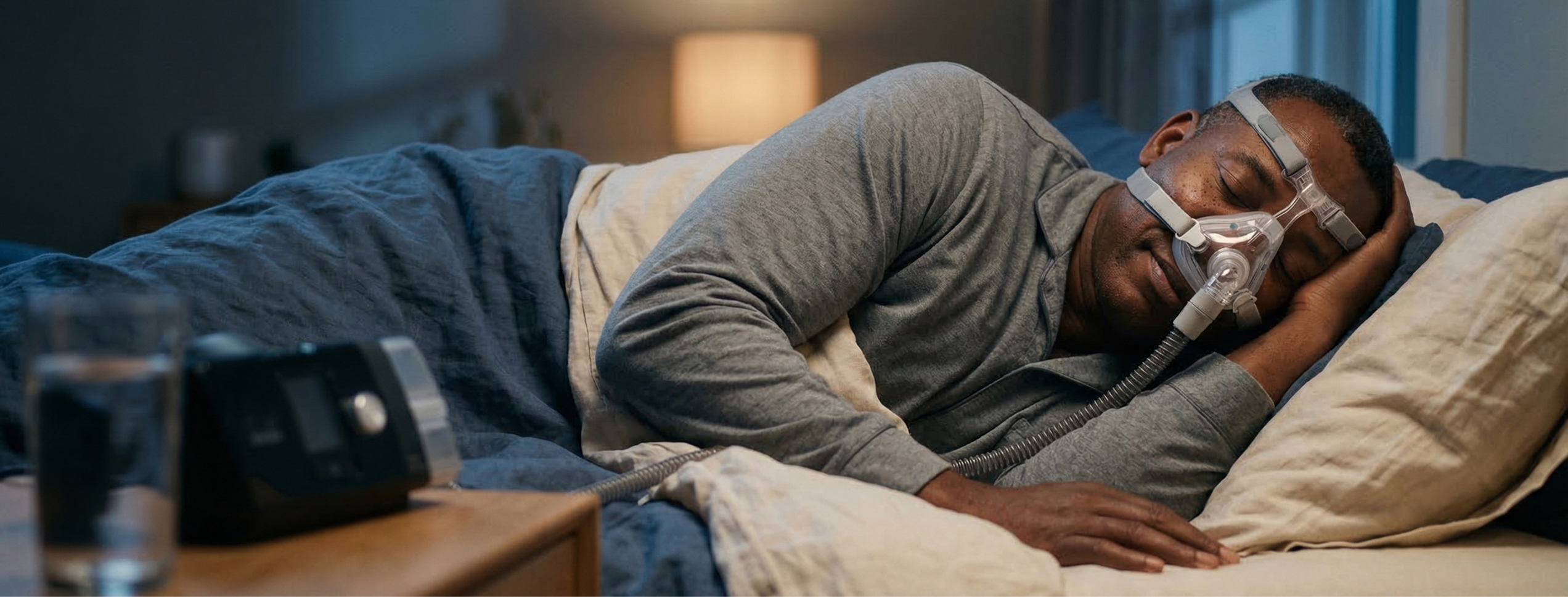
In sleep apnea patients, the airway becomes most vulnerable at the end of their breath cycle—this is when therapeutic pressure is needed. Kairos Positive Air Pressure (KPAP) delivers the right pressure at the right time—or at the Kairos—to prevent airway collapse.
Synced to Your Breath
A world of difference in a single breath.
Here’s how KPAP works across a single breath.
-
Current State The KairosPressure 10.0 cmH₂O
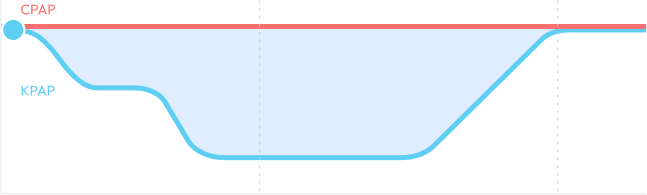 Step 01 – The Kairos
Late exhalation
This is the critical moment. The airway is most vulnerable to collapse during late exhalation. KPAP ensures full therapeutic pressure is delivered here, setting the foundation of the entire algorithm.
-
Current State InspirationPressure 10 → 5 cmH₂O
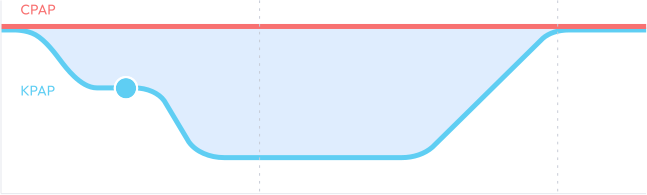 Step 02 – Inspiration
Two-step pressure reduction
First drop: 2 cmH₂O drop at the start of inspiration.
Second drop: 3 cmH₂O additional drop later in the inspiratory phase. Pressure remains at a lower level for a more natural inhale. -
Current State The FloorPressure 5.0 cmH₂O
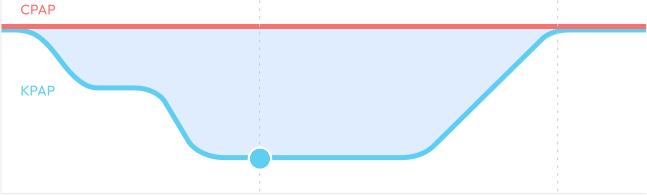 Step 03 – The Floor
The 5 cmH₂O floor
KPAP does not allow pressure to drop below 5 cmH₂O. For patients on lower settings, the drops scale accordingly. For example, a patient set at 8 cmH₂O experiences a 3 cmH₂O total drop while maintaining therapeutic airway support.
-
Current State The TransitionPressure 5.0 cmH₂O
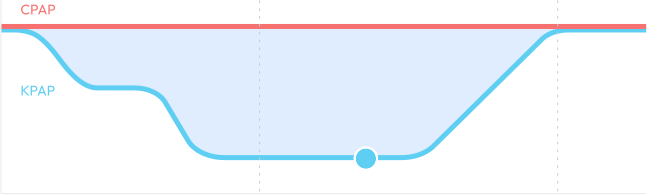 Step 04 – The Transition
Inspiration to expiration
KPAP maintains the reduced pressure as the breath transitions from inhale into exhale.
-
Current State ReturnPressure 10.0 cmH₂O
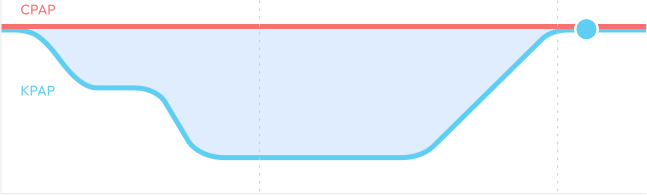 Step 05 – The Return
Return to Kairos
During late exhalation, pressure returns to its full therapeutic level, arriving at the moment the airway needs it most. The cycle completes, ready for the next breath.
PATIENT PREFERENCE
93%
93% of PAP-naïve participants preferred KPAP over CPAP across multiple pressure settings.2
REDUCED MASK LEAK
40%
KPAP use resulted in 40% reduction in unintentional mask leak compared to CPAP.^2
PAP Comparison
Not all PAP therapy is the same.
KPAP is the only approach that delivers therapeutic pressure only when the airway truly requires it to stay open.
Dynamically optimizes pressure across the entire breathing cycle.
Drops pressure during inspiration, stays low into exhalation, and restores therapeutic pressure only at late exhalation (the Kairos) when the airway is most vulnerable. This is a fundamentally different approach to pressure delivery.
CPAP
Constant pressure delivered throughout the entire breath cycle with no variation.
Bi-Level
Two fixed pressure levels: one for inspiration (IPAP) and one for expiration (EPAP). Bi-Level delivers greater pressure at inspiration and lower pressure at expiration—the opposite of KPAP.
APAP/Auto CPAP
Adjusts the overall pressure level over time based on detected events but still delivers constant pressure within each breath.
Expiratory Pressure Relief (EPR)
Pressure drops slightly (1-3 cmH₂O) throughout expiration.